

Your tent is your home in the wilderness. It's where you'll sleep, store your gear, and take shelter from the elements. Choose the wrong one, and you'll spend your trip uncomfortable, cold, or worse—dealing with a collapsed shelter in the middle of a storm. Choose the right one, and you'll barely think about it except to appreciate how well it works.
With hundreds of options on the market, finding the best camping tents for your needs can feel overwhelming. This guide breaks down what actually matters so you can make a smart choice without getting lost in marketing hype.
Why Choosing the Right Camping Tent Matters
A tent isn't just fabric and poles. It's your protection against rain, wind, insects, and cold. The right shelter makes the difference between waking up refreshed and waking up miserable after a sleepless night fighting condensation or cold drafts.
The best camping tent for you depends entirely on how you camp. Weekend car campers have different needs than backpackers, counting every ounce. Families require more space than solo travelers. Summer campers in mild climates need different features than those facing mountain storms or winter snow.
Camper's Pick
Best for finding the tent that fits your exact trip type
There's no single best camping tent — it depends on season, group size, and weight budget. The tent collections below let you filter all three simultaneously, so you can shop with confidence rather than guesswork.
- Oakley Shop camping equipment at Oakley
- Mountain Hardwear Shop camping equipment at Mountain Hardwear
- Columbia Sportswear Shop camping equipment at Columbia Sportswear
- Sorel Shop camping equipment at Sorel
- Garmin Shop camping equipment at Garmin
Key Features to Look for in the Best Camping Tents
Size and Capacity
Tent capacity ratings are notoriously optimistic. A "three-person" tent realistically fits two people with gear. If you want actual comfort, add one to the capacity rating. A family of four should look at five or six-person tents.
Consider not just sleeping space but room for your gear, especially if the weather forces you to spend time inside. Look at floor dimensions and peak height. If you're tall or want to change clothes inside, you need adequate headroom.
Seasonality and Weather Resistance
Tents are rated by season:
- Two-season tents: Light, breathable, designed for summer camping in good weather
- Three-season tents: The most versatile option for spring, summer, and fall camping with moderate weather protection
- Four-season tents: Built for winter camping, heavy snow loads, and extreme conditions with sturdy poles and minimal mesh
Most campers need a three-season tent. Four-season tents are heavier and less ventilated—overkill unless you're camping in genuine winter conditions or high mountains.
Check the waterproof rating of the rainfly and floor. Look for at least 1,500mm for the rainfly and 3,000mm for the floor. Quality tents have sealed seams and bathtub-style floors that extend several inches up the walls to prevent water entry.
Material and Durability
Tent materials balance weight, durability, and cost. Ripstop nylon and polyester are common choices. Higher denier numbers mean thicker, more durable fabric, but also more weight.
Pole materials matter too. Aluminum poles are lighter and stronger than fiberglass but cost more. Fiberglass poles work fine for occasional car camping, but can snap under stress or in cold weather.
Tent Setup and Ease of Use
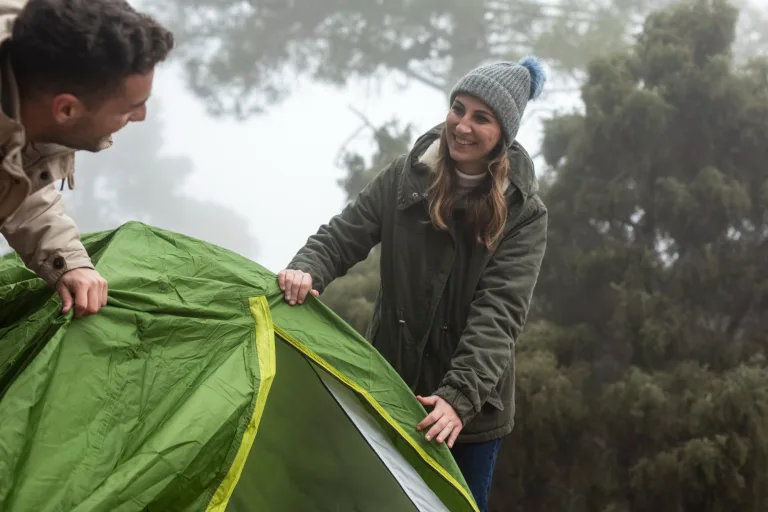
Watch setup videos before buying. Some tents pitch in minutes with color-coded poles and clips. Others require patience and practice. Freestanding tents (they stand without stakes) offer more flexibility in where you can pitch them and are easier to move if needed.
Consider whether you'll usually set up solo or with help. Larger tents often need two people for efficient setup. Hub-style pole systems are generally easier than traditional crossed poles.
Ventilation and Airflow
Poor ventilation creates condensation—moisture from your breath that collects on tent walls and drips on you and your gear. The best tents for camping have multiple mesh panels and adjustable vents to keep air moving.
Look for tents with vestibules (covered areas outside the main tent body) for storing muddy boots and gear. This keeps your sleeping area cleaner and adds livable space during bad weather.
Types of Camping Tents
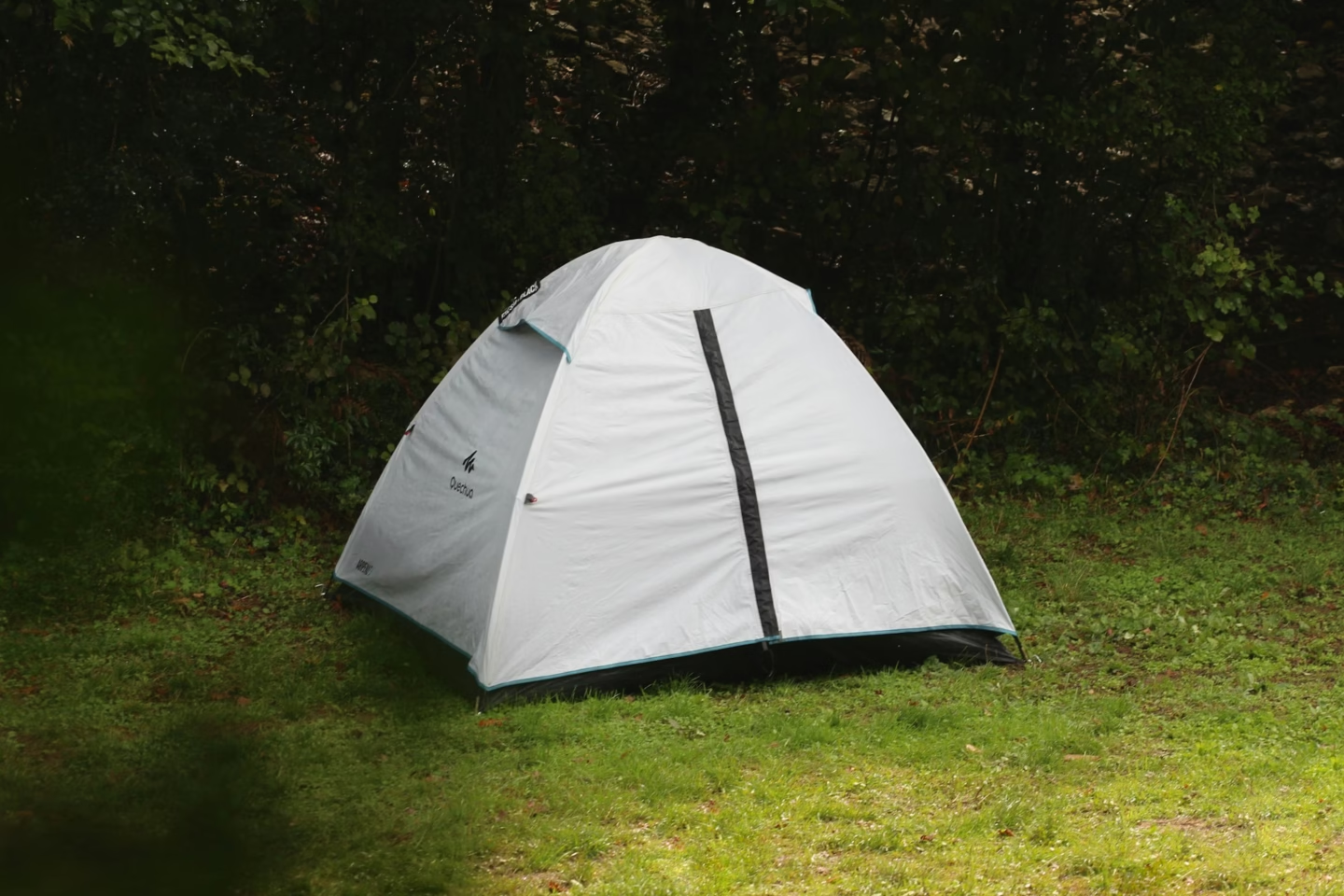
Different tent styles suit different camping approaches. Dome tents are the most common and offer a good balance of space, stability, and ease of setup. Cabin-style tents maximize interior space with nearly vertical walls but catch wind more easily.
Tunnel tents excel in wind resistance but must be staked out to stand. Geodesic tents with multiple intersecting poles handle extreme weather best but are complex to set up. Pop-up tents offer instant setup but lack durability for serious use.
Understanding your primary camping environment helps narrow these choices. Weekend car campers prioritize comfort and space. Backpackers focus on weight and packed size. Frequent movers between campsites value quick setup.
Top Picks for the Best Camping Tents
Best Tents for Solo Camping
Solo campers benefit from compact one or two-person tents that balance livable space with low weight. Look for options that weigh under four pounds if backpacking, or prioritize extra room if car camping. Single-wall tents save weight but manage condensation poorly. Double-wall designs with a separate rainfly and inner tent work better in varied conditions.
Good solo tents have enough floor space to sit up comfortably and store gear inside or in vestibules. Single-door designs save weight but can feel cramped. Two doors offer convenience worth the minimal extra weight for many campers.
Best Tents for Family Camping
The best family camping tents prioritize space, durability, and features over weight. Look for models with room dividers to create separate sleeping areas. Multiple doors prevent middle-of-the-night climbs over sleeping family members.
Storage pockets keep small items organized. Large vestibules become mudrooms for shoes and gear. Cabin-style designs with near-vertical walls maximize usable interior space. Consider tents with electrical cord access ports if you camp where power hookups are available.
Best Lightweight and Compact Tents for Backpackers
Backpackers measure tent weight obsessively. The best camping tents for backpacking balance minimal weight with adequate weather protection. Trail weight (tent body, rainfly, and poles) matters more than packaged weight.
Look for tents under three pounds for solo use, under four pounds for two-person options. Pay attention to packed size—some lightweight tents compress better than others. Trekking pole tents eliminate dedicated poles entirely, saving significant weight at the cost of convenience.
Best All-Season Tents for Extreme Conditions
Four-season and mountaineering tents feature heavy-duty poles, minimal mesh, and designs that shed snow and resist high winds. These tents prioritize strength over weight and ventilation.
Look for geodesic or semi-geodesic pole structures with multiple crossings for stability. Snow valves allow clearing accumulated snow from inside. Strong, waterproof floors prevent moisture entry when pitched on snow.
Quick overview





Maintenance and Care Tips for Your Camping Tent
How to Clean Your Tent
Set up your tent at home after each trip and let it dry completely before storing. Moisture trapped in storage leads to mildew and coated fabric deterioration. Brush off loose dirt once dry.
For deeper cleaning, hand wash with mild soap and lukewarm water. Never use a washing machine—the agitation damages coatings and seams. Never use harsh detergents or bleach. Rinse thoroughly and allow complete drying.
Clean the tent floor with a sponge and mild soap solution. Pay special attention to zippers—brush out dirt and lubricate them occasionally with zipper lubricant or unscented candle wax.
Storing and Maintaining Your Tent
Never store a tent compressed in its stuff sack for long periods. The constant compression breaks down waterproof coatings. Instead, store loosely in a large cotton or mesh bag in a cool, dry place away from direct sunlight.
UV exposure degrades tent fabrics faster than anything else. Set up your tent in shade when possible and don't leave it pitched for days on end in bright sun. This is especially true for brightly colored rainflies.
Periodically check and reseal seams. Waterproof coatings eventually wear off with use and UV exposure. Seam sealer and tent waterproofing treatments extend tent life significantly.
Repairing Small Damages
Keep a repair kit with your tent:
- Tenacious tape or duct tape for quick fabric repairs
- Spare stakes (you will lose some)
- Small pole splint for emergency pole repairs
- Seam sealer for touch-ups
Small tears fixed promptly don't become big tears. Clean the damaged area, let it dry completely, and apply repair tape to both sides of the tear. For pole damage in the field, duct tape and a stick make a functional splint to get you through the trip.
Choosing Your Perfect Shelter
Finding the best camping tents for your needs means honestly assessing how, where, and when you camp. Consider your typical camping conditions, group size, and transportation method. The tent that works perfectly for weekend car camping with your family won't suit solo backpacking trips.
Don't get caught up in features you won't use. A budget-friendly three-season tent serves most campers better than an expensive four-season model they don't need. Similarly, backpackers benefit more from saving a pound in tent weight than from having extra interior pockets.