Camping in the tent offers an accessible way to experience nature without requiring expensive RVs or elaborate equipment. The appeal is undeniable—sleeping under stars, waking to birdsong, and disconnecting from daily routines creates memories that last far longer than the trip itself. However, first-time tent campers often harbor concerns about discomfort, safety, wildlife encounters, or simply not knowing what to expect.
These worries are understandable, but shouldn't prevent you from trying tent camping. With proper preparation and realistic expectations, your first camping experience can be comfortable, safe, and genuinely enjoyable rather than a test of endurance you're relieved to finish.
Essential Gear for Tent Camping
Camper's Pick
Best for getting your very first campout right
The biggest mistakes first-time campers make are gear-related — a tent they can't pitch in the dark, a sleeping bag rated too warm, or shoes that weren't broken in. Our beginner camping section helps you avoid all three with curated, no-jargon starter kits.
- Oakley Shop beginner camping gear at Oakley
- Mountain Hardwear Shop beginner camping gear at Mountain Hardwear
- Columbia Sportswear Shop beginner camping gear at Columbia Sportswear
- Sorel Shop beginner camping gear at Sorel
- Garmin Shop beginner camping gear at Garmin
Choosing the Right Tent for Your Needs
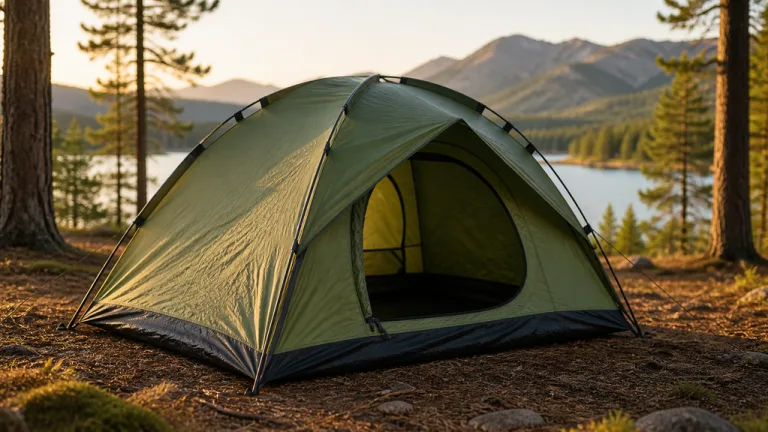
Your tent is the most significant gear decision for camping. Size matters—tents are rated by how many people they sleep, but these ratings assume minimal gear and cozy sleeping arrangements. A four-person tent comfortably sleeps two adults with gear, or three people without much equipment inside.
Three-season tents handle spring, summer, and fall camping in most climates. They provide adequate weather protection and ventilation for typical conditions. Four-season tents designed for winter conditions feature stronger poles, heavier fabrics, and designs that withstand snow and high winds, but they cost more and weigh substantially more than three-season alternatives.
Sleeping Gear: Sleeping Bags, Pads, and Pillows
Quality sleep determines whether you enjoy camping in the tent or spend the trip exhausted and miserable. Sleeping bags rated for temperatures at least 10-15 degrees colder than expected nighttime lows provide comfort margins for unexpected cold or if you sleep cold naturally.
Sleeping pads matter as much as bags. They insulate you from cold ground and provide cushioning that makes sleep possible on hard surfaces. Foam pads cost less and never fail, while inflatable pads offer more comfort but risk punctures. Many first-time campers underestimate how uncomfortable sleeping directly on the ground feels and wake up sore and tired.
Cooking Equipment and Food Storage
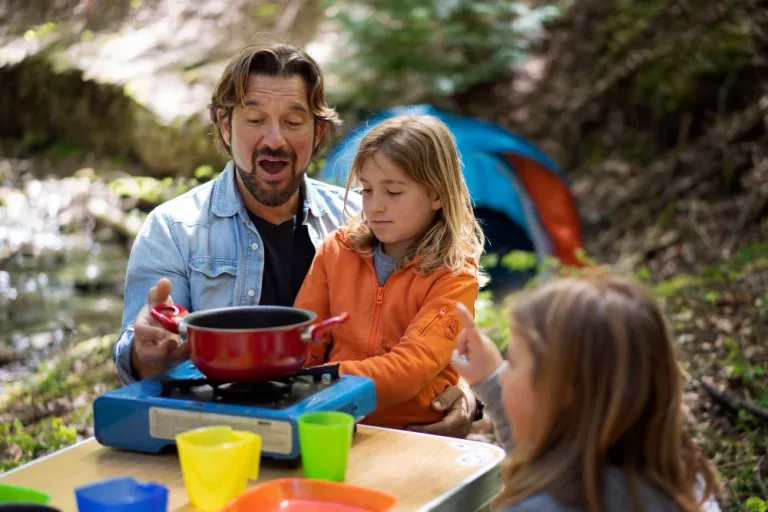
Plan simple meals requiring minimal preparation for your first camping trip. Portable camp stoves provide reliable cooking without depending on campfires. Bring a pot for boiling water, a pan for cooking, basic utensils, and supplies for cleaning dishes.
Store food properly to avoid attracting wildlife. Use bear canisters where required or hang food bags away from your tent. Never keep food inside your tent overnight—this draws animals directly to where you sleep.
Additional Essential Gear
First-time tent campers should bring headlamps or flashlights with extra batteries, a first aid kit, maps or GPS for the area, appropriate clothing for expected weather, water bottles or hydration systems, toilet paper, and a trowel for areas without facilities, and multi-tools or knives for various camp tasks.
Preparing for the Elements: Weather and Comfort
How to Prepare for Different Weather Conditions
Check weather forecasts as your trip approaches and pack accordingly. Rain happens even when forecasts predict sun, so always bring waterproof rain gear—jacket, pants, and potentially a ground cloth under your tent for additional moisture protection.
Layering clothes provides flexibility for varying temperatures. Base layers wick moisture, mid-layers insulate, and outer layers block wind and rain. This system lets you adjust warmth by adding or removing layers rather than relying on a single heavy jacket.
Sun protection matters more than many first-time campers realize. Bring hats, sunscreen, and sunglasses, even for shaded campsites. Reflection from water or snow intensifies sun exposure beyond what you experience in daily life.
Staying Comfortable While Camping in the Tent
Comfort comes from numerous small decisions. Choose campsites with level ground—sleeping on slopes causes you to slide down throughout the night. Clear rocks, sticks, and pinecones from your tent area before setup. These small objects feel massive when you're lying on them all night.
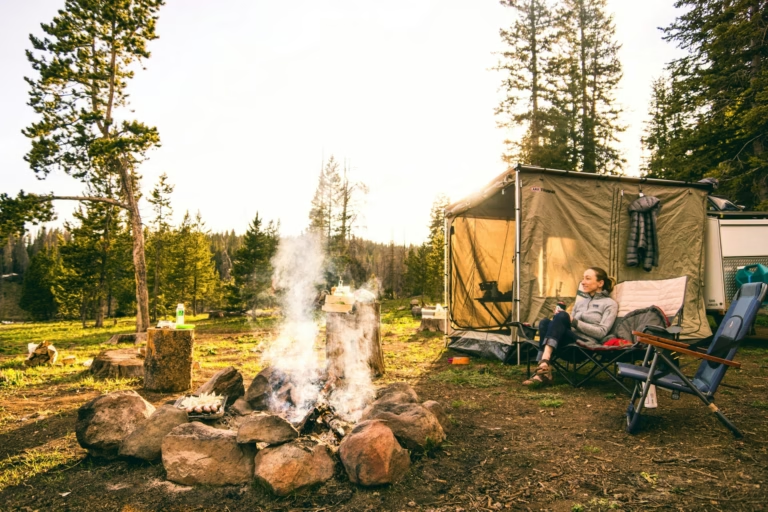
Bring camp chairs for sitting around the campsite. Sitting on the ground or logs gets uncomfortable quickly. Chairs dramatically improve comfort during meals and evening relaxation.
Change into dry sleeping clothes before bed. Never sleep in the clothes you wore during the day—they're damp from sweat and will make you cold overnight. Keep a complete dry set specifically for sleeping.
Setting Up Your Tent: Tips for First-Time Campers
Quick overview





Selecting the Perfect Campsite
Arrive early enough to select your site in daylight and complete setup before darkness falls. Setting up camping in the tent after dark is frustrating and takes much longer than a daylight setup.
Look for level ground away from water. While camping beside lakes or streams sounds appealing, these areas attract insects, experience temperature fluctuations, and risk flooding if rain causes water levels to rise.
Consider sun exposure—sites receiving morning sun help you wake comfortably, while full-day sun can make tents unbearably hot during summer. Afternoon shade provides relief during the warmest hours.
Setting Up Your Tent Correctly
Follow the manufacturer's instructions for tent setup rather than guessing. Most tents require specific pole configurations and stake placements for proper function. Taking time to set up correctly the first time beats rushing through setup only to discover problems later.
Guy out all tent lines and stake everything securely, even if the weather seems calm. Afternoon storms appear suddenly, and properly secured tents withstand wind that would destroy loosely staked tents.
Create a vestibule area for removing dirty shoes before entering your sleeping area. Keeping dirt and moisture out of your tent interior improves comfort significantly.
Family Tent Camping: Special Considerations
Choosing a Family-Friendly Tent
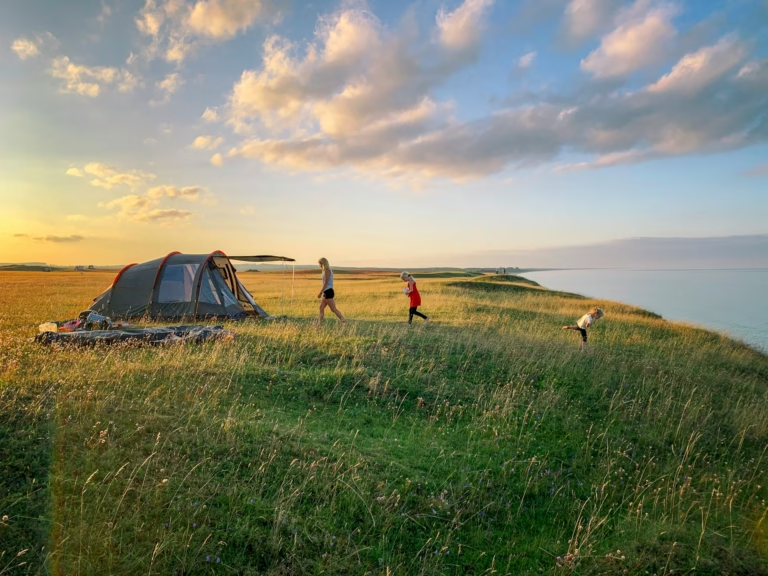
Family camping in a tent requires larger tents with sufficient space for everyone to sleep comfortably, plus gear storage. Many families choose tents with separate rooms, providing parents with some privacy from children. Cabin-style tents with vertical walls maximize usable interior space compared to dome tents, where sloped walls reduce functional area.
Ease of setup matters more for family tent camping since you're managing children while setting up camp. Tents with color-coded poles and simple designs reduce setup time and frustration when kids are tired and hungry.
Family Camping Activities and Comfort
Plan activities that keep children engaged—nature scavenger hunts, fishing, swimming, hiking appropriate distances for their ages, and evening games around the campfire. Bored children make camping unpleasant for everyone.
Bring comfort items that help children sleep in unfamiliar environments—favorite stuffed animals, familiar blankets, or small night lights. These items ease the transition from home beds to camping in the tent.
Choose campgrounds with amenities families appreciate—bathrooms with running water, playgrounds, and nearby attractions. Starting with developed campgrounds builds positive camping associations before attempting more rustic locations.
Winter Tent Camping: Additional Challenges and Tips
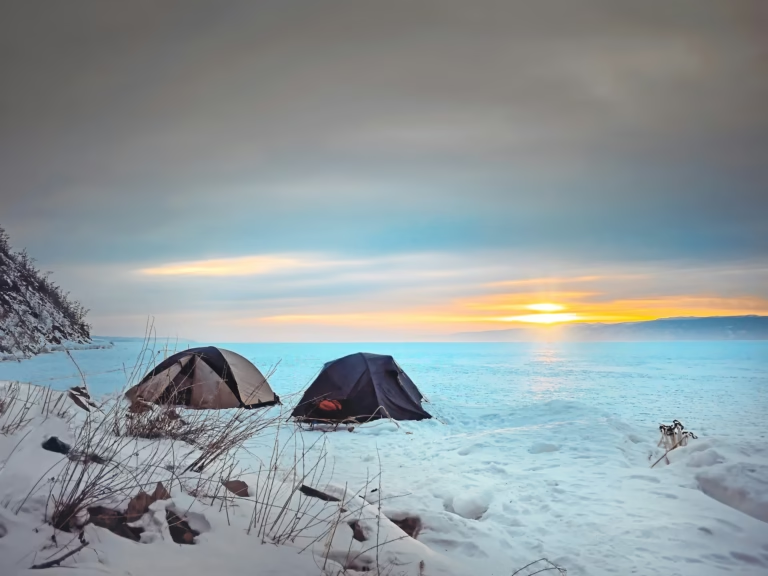
Winter tent camping presents unique challenges requiring specialized preparation. Four-season tents withstand snow loads and high winds that would damage three-season tents. Winter sleeping bags rated for temperatures well below expected lows prevent dangerous cold during the night.
Staying dry becomes critical in winter. Moisture from breath and body heat condenses on cold tent walls, creating dampness that compromises insulation. Adequate ventilation reduces condensation even though it allows some heat loss. Wipe condensation from tent walls regularly before it freezes or drips on sleeping bags.
Essential Preparation Checklist
Before your first camping trip, ensure you have:
- Appropriate tent for the season and group size
- Sleeping bags rated for expected temperatures
- Sleeping pads for insulation and cushioning
- Camp stove, fuel, and cooking equipment
- Adequate food and water storage
- Weather-appropriate clothing in layers
- Rain gear, regardless of the forecast
- Headlamp or flashlight with extra batteries
- First aid kit
- Toilet paper and sanitation supplies
- Maps or GPS for the area
- Camp chairs for comfort
- Multi-tool or knife
Making Your First Trip Successful
Camping in the tent for the first time succeeds through realistic expectations and thorough preparation. You might not sleep perfectly, the weather might not cooperate ideally, and small challenges will arise. These imperfections are normal and don't mean you're doing something wrong.
Start with short trips close to home at developed campgrounds with facilities. As you gain experience and confidence, gradually attempt longer trips or more remote locations. Each camping experience teaches lessons that improve future outings.
The combination of proper gear, suitable location selection, and preparation for weather conditions creates the foundations for enjoyable camping in the tent. Whether you're planning solo trips, family tent camping with children, or eventually attempting winter tent camping, these fundamentals apply universally. With knowledge and preparation, your first tent camping experience can be the beginning of a rewarding outdoor recreation pursuit rather than a one-time ordeal you never want to repeat.