

Camping with children creates memories that last a lifetime. Watching their faces light up at the first sight of a campfire, hearing their laughter echo through the woods, and seeing them discover the wonders of nature brings joy that makes any challenges worthwhile. However, camping with kids requires more planning and preparation than adult-only trips. Children have different needs, shorter attention spans, and require additional safety considerations.
A well-organized camping checklist with kids makes the difference between a stressful outdoor ordeal and a fun family experience everyone looks forward to repeating. This comprehensive guide helps parents pack appropriately, prepare for various situations, and create positive camping experiences that foster a love of the outdoors in their children.
Why Proper Preparation is Key for Camping with Kids
Taking children camping without thorough preparation often leads to problems that could have been easily avoided. Understanding what makes family camping different from adult camping helps you prepare effectively.
The Unique Needs of Kids While Camping
Children have less tolerance for discomfort than adults. They get cold faster, hungry more frequently, and bored more easily. Their smaller bodies lose heat more quickly, making proper clothing and sleeping gear particularly important. Kids also tire more easily and may need frequent rest breaks during hikes or setup activities.
Safety concerns multiply with children. They're naturally curious and may not recognize dangers like poisonous plants, steep drop-offs, or wildlife. Kids can wander off without realizing they're getting lost. They're also more susceptible to dehydration, sunburn, and insect bites than adults.
Benefits of Camping with Kids
Despite the extra work, camping offers tremendous benefits for children's development. Outdoor experiences teach self-reliance, problem-solving, and resilience. Kids learn to appreciate nature and understand environmental conservation. Family camping strengthens bonds through shared experiences and unplugged quality time together.
Children who camp regularly develop better physical fitness, improved mood, and reduced stress. They learn practical skills like fire safety, knot-tying, and navigation. These experiences build confidence and create positive associations with outdoor activities that can last throughout their lives.
Essential Camping Gear for Kids
Your tent camping checklist with kids needs to address equipment specific to children's needs beyond standard camping gear.
Tent and Shelter Setup
Choose a tent large enough that kids have their own sleeping space without feeling cramped. Families often need larger tents than expected—a four-person tent realistically sleeps two adults and one child comfortably. Consider tents with separate rooms or dividers that give children defined spaces.
Bring extra tarps for creating covered play areas if rain keeps kids inside for extended periods. A screen house provides bug-free space where children can play while you cook or relax. These shelters make camping with kids more comfortable during inclement weather.
Kids' Clothing for Camping
Children need more clothing changes than adults since they're prone to spills, getting dirty, and potentially wetting themselves. Pack at least two complete outfits per day, plus extras. Layer clothing so you can adjust as temperatures change throughout the day and night.
Include these clothing items in your camping with kids checklist:
- Moisture-wicking base layers for daytime and sleeping
- Warm fleece or insulated jackets
- Waterproof rain jackets and pants
- Several pairs of socks (kids' feet get wet frequently)
- Sturdy closed-toe shoes plus water shoes for creek play
- Sun hats with wide brims
- Warm hats and gloves,s even in summer
- Pajamas that provide adequate warmth
Safety Gear for Kids
Safety equipment specific to children should be prioritized in any kids' camping checklist. Bring a comprehensive first aid kit,t including children's pain relievers, allergy medications, and any prescription medications your kids require. Pack extra supplies for treating scrapes, cuts, and insect bites, which happen frequently with active children.
Whistles for each child provide a way to signal for help if they become separated from the group. Teach kids to stay put and blow their whistles if lost. Glow sticks or small flashlights help children feel secure at night and make them visible around the campsite after dark.
Bring child-safe insect repellent and sunscreen formulated for kids' sensitive skin. Apply generously and reapply frequently, especially after swimming or sweating. Life jackets in appropriate sizes are necessary if your camping area includes water activities.
Camping Essentials for the Whole Family
Beyond kid-specific gear, family camping requires equipment that accommodates everyone's needs.
Family-Friendly Cooking Gear
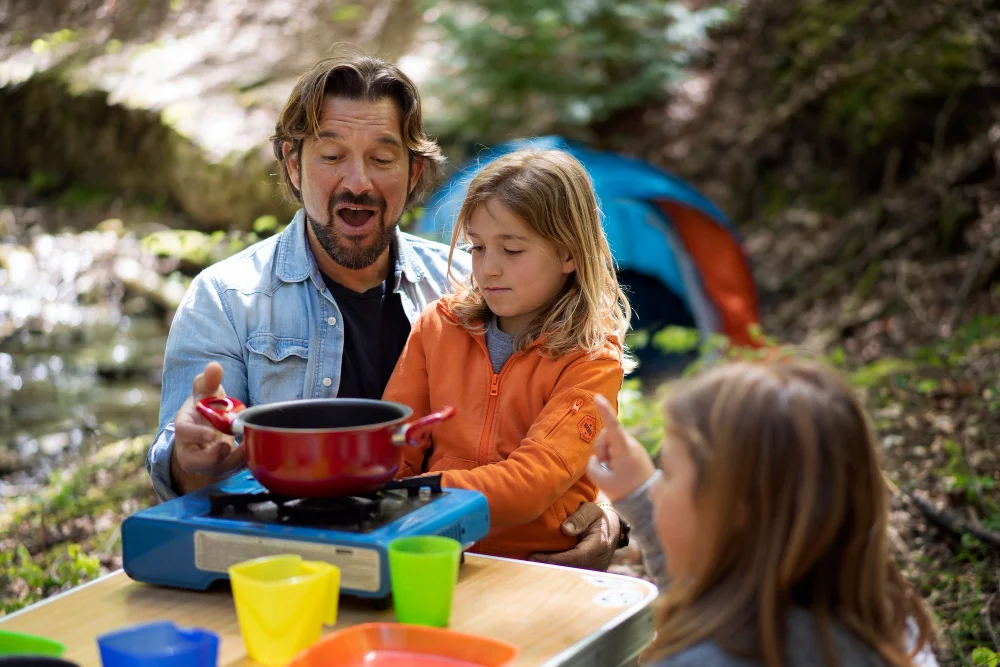
Meal preparation with children around requires extra attention to safety. Bring a stable camp stove positioned where kids won't accidentally bump into it or knock it over. Pack cookware with handles that don't get hot, and consider bringing paper or plastic plates that kids can't break.
Pre-prepare some meals at home to reduce cooking time and complexity at camp. Kids get hungry and impatient, so having quick meal options prevents meltdowns. Bring easy snacks like granola bars, fruit, crackers, and cheese that satisfy hungry children between meals.
Hydration and Food for Kids
Children need frequent reminders to drink water, especially when active outdoors. Bring individual water bottles for each child—personalized bottles help kids keep track of their own. Pack more water than you think you'll need since kids drink surprisingly large amounts when playing outside.
Plan meals around foods your children actually eat. Camping isn't the time to introduce new foods that kids might reject. Bring familiar favorites along with some special treats that make camping feel like an occasion. S'mores ingredients are practically mandatory for creating positive camping memories.
Entertainment and Activities for Kids
Preventing boredom keeps kids happy and engaged. Your camping checklist with kids should include age-appropriate activities and entertainment. Pack playing cards, travel games, coloring books and crayons, and outdoor toys like balls or frisbees. Nature scavenger hunt lists teach observation skills while keeping children entertained.
Bring materials for nature crafts—kids can collect leaves, pinecones, and stones to create art projects. Binoculars for bird watching, magnifying glasses for examining insects, and field guides for identifying plants engage curious minds. Audiobooks or music players provide entertainment during quiet time or if the weather keeps everyone tent-bound.
Organizing Your Camping Checklist with Kids
An effective organization makes packing easier and helps ensure nothing important gets forgotten.
Packing List for Family Camping
Create a comprehensive camping checklist that you refine after each trip. Divide your list into categories: shelter, sleeping, clothing, cooking, safety, entertainment, and toiletries. Check off items as you pack them to avoid last-minute scrambling or forgetting necessities.
Pack children's items in separate bags that they can identify easily. Use different colored stuff sacks for each child or label bags clearly. This organization helps kids take ownership of their gear and makes finding specific items much easier at the campsite.
Include children in the packing process. Even young kids can help gather their clothing or choose which toys to bring. This involvement builds excitement for the trip and teaches responsibility. Create a simple kids camping checklist with pictures that young children can use to pack their own backpacks.
Tent Setup with Kids
Arriving at your campsite with plenty of daylight remaining makes setup easier with children. Kids can help with simple tasks like unrolling sleeping bags, arranging gear inside the tent, or collecting firewood. Assign age-appropriate jobs that make them feel helpful without getting underfoot.
Establish the campsite layout with safety in mind. Position the cooking area away from where children play. Mark boundaries so kids understand where they can explore freely and where they need adult supervision. Setting clear rules from the start prevents accidents and gives children security through knowing expectations.
Keeping Kids Safe and Comfortable While Camping
Safety and comfort should be top priorities in your tent camping checklist with kids.
Safety Tips for Camping with Kids
Establish a buddy system where children never go anywhere alone, even to the bathroom. Teach kids to recognize your campsite from various angles so they can find their way back. Consider bringing a GPS device or personal locator beacon for remote camping areas.
Review safety rules before the trip and reinforce them at the campsite. Teach respect for wildlife—look but don't approach or feed animals. Establish boundaries around the campfire and supervise closely when it's burning. Show children how to recognize and avoid hazardous plants like poison ivy.
Check weather forecasts and prepare for changing conditions. Have a plan for seeking shelter during storms. Keep kids dry since wet clothing quickly leads to dangerous chilling, especially at night.
Maintaining Comfort During the Trip
Comfortable kids are happy kids. Ensure sleeping bags are adequately warm and consider adding blankets for extra coziness. Bring favorite stuffed animals or comfort items that help children sleep in unfamiliar surroundings.
Maintain regular routines as much as possible. Try to keep meals and bedtimes somewhat consistent with home schedules. Familiar routines provide security and prevent overtired, cranky children from ruining everyone's experience.
Watch for signs of discomfort or distress. Address issues promptly before minor problems become major meltdowns. Sometimes, a break, a snack, or just some quiet time can completely reset a child's mood and save the day.
Conclusion
Camping with children requires more preparation and patience than adult camping, but the rewards far exceed the extra effort. A thorough camping checklist with kids covering shelter, clothing, safety gear, food, hydration, and entertainment sets your family up for success. Proper preparation prevents most problems and allows everyone to focus on enjoying the experience rather than dealing with preventable issues.
Remember that perfection isn't the goal—creating positive outdoor experiences is what matters. Even trips with challenges teach resilience and problem-solving. Kids are remarkably adaptable, and what seems like a disaster to parents often becomes their favorite camping memory.