

There's something deeply satisfying about cooking a warm meal outdoors after a day spent in nature. Whether you're boiling water for morning coffee or grilling dinner over an open flame, having the right camping cooking equipment makes all the difference between a frustrating experience and an enjoyable one. The gear you bring determines not just what you can cook, but how much you'll actually look forward to mealtime at your campsite.
Choosing camping cooking equipment doesn't have to be complicated, but it does require some thought. You'll want gear that's reliable, easy to use, and appropriate for your style of camping. This guide will walk you through everything you need to know about selecting the best cooking equipment for camping, from portable stoves to essential utensils.
Essential Factors to Consider When Choosing Camping Cooking Equipment
Before you start shopping, understand what makes good camping gear stand out from mediocre options.
Weight and Portability
How you're getting to your campsite matters significantly. Backpackers counting every ounce need ultralight options, while car campers can afford heavier, more feature-rich equipment. Think realistically about how far you'll carry your gear and how much space you have available. Even car campers benefit from compact designs that pack efficiently and leave room for other supplies.
Durability and Materials
Your camping equipment for cooking needs to withstand rough handling, temperature extremes, and outdoor conditions. Stainless steel offers excellent durability and even heat distribution. Aluminum provides a lighter alternative that still performs well.
Cast iron is heavy but practically indestructible and perfect for campfire cooking. Titanium represents the premium choice for backpackers who want strength without weight. Consider how often you'll camp and how hard you'll use your gear when deciding how much to invest in durability.
Functionality and Versatility
The best cooking equipment for camping serves multiple purposes. A pot that doubles as a bowl, a spork that combines fork and spoon, or a stove that works with various fuel types all reduce the amount of gear you need to carry.
Look for equipment that handles the types of meals you actually plan to cook. If you only boil water and heat canned soup, you don't need an elaborate setup. If you enjoy cooking more complex meals, invest in versatile pieces that expand your options.
Top Picks for Camping Cooking Equipment
Let's break down the specific gear categories and what to look for in each.
Camping Stoves and Burners
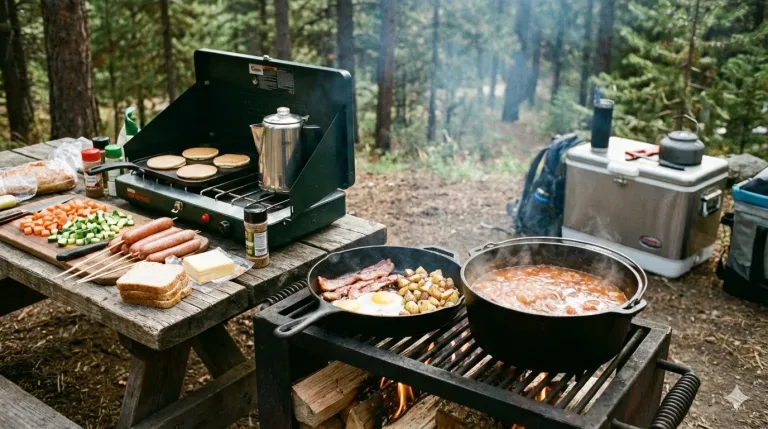
A reliable camping stove forms the foundation of your outdoor kitchen. Canister stoves offer convenience and quick boiling times, making them popular for backpacking. Liquid fuel stoves perform better in cold weather and at high altitudes. Propane stoves work well for car camping, providing steady heat and easy operation. Consider BTU output for boiling speed, fuel efficiency for longer trips, and simmer control for actual cooking rather than just boiling water.
Cooking Pots and Pans
Your cooking vessels need to match your stove and meal plans. A basic pot for boiling water suffices for minimalist campers. More elaborate setups might include a frying pan for breakfast, a larger pot for group meals, and a kettle for hot drinks. Nesting cookware sets save space by stacking inside each other. Look for folding handles that reduce pack size and stay-cool grips that prevent burns.
Utensils and Kitchen Accessories
Don't overlook the small items that make cooking possible. A good knife, cutting board, spatula, and serving spoon are the minimum requirements. Camping cooking equipment should include a can opener if you're bringing canned goods. Pack plates, bowls, and cups for everyone in your group. Biodegradable soap and a scrubbing pad handle cleanup. Lighter or waterproof matches start your stove or campfire. Consider bringing a small towel specifically for drying dishes.
Grills and BBQ Equipment
Portable camping grills let you cook over direct heat, giving food that distinctive grilled flavor. Fold-flat designs pack easily and set up quickly. Some run on propane canisters while others work over charcoal or wood. Grill grates that sit over campfire rings offer the simplest option if fires are allowed at your campsite. Remember to bring long-handled tongs and a spatula designed for grilling.
Campfire Cooking Equipment
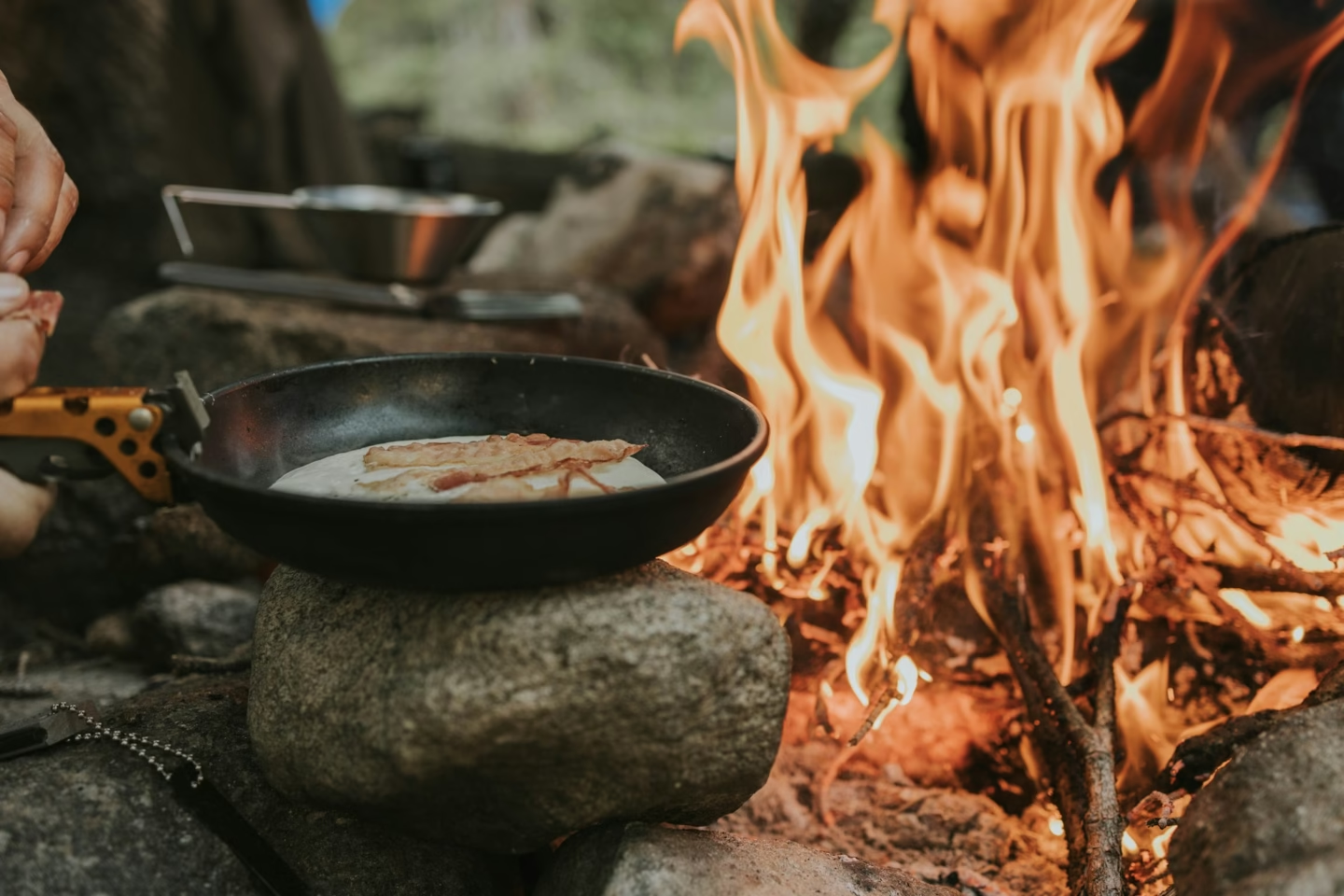
Cooking over an open fire requires specialized tools. A campfire grill grate elevates food above flames for even cooking. Cast-iron Dutch ovens excel at one-pot meals and even baking when buried in coals. Pie irons make sandwiches and desserts fun for kids. Long-handled roasting forks work for hot dogs and marshmallows. If you're serious about campfire cooking, a tripod with hanging chains lets you adjust pot height above the flames.
Best Cooking Gear for Specific Types of Camping
Your camping style should guide your equipment choices.
Backpacking Camping Cooking Gear
Backpackers need the lightest camping cooking equipment available without sacrificing functionality. A small canister stove, a titanium pot, and a spork might comprise your entire kitchen. Freeze-dried meals reduce cooking complexity to just boiling water. Every item should serve multiple purposes or earn its place through absolute necessity. Calculate the weight per serving for food to maximize calorie density while minimizing pack weight.
Car Camping Cooking Gear
Car campers can bring more comfortable equipment since weight matters less. A two-burner propane stove provides a familiar cooking experience. Bring real plates instead of lightweight alternatives. A cooler keeps perishable food fresh for several days.
Cast-iron skillets and Dutch ovens become practical options. You might even bring a coffee percolator, griddle, or other specialty items that make camp cooking more enjoyable.
Family Camping Cooking Equipment
Families need cooking equipment for camping that handles larger quantities and diverse preferences. A bigger stove with multiple burners lets you cook different items simultaneously. Larger pots and pans accommodate family-sized portions. Bring equipment that kids can safely help with, making cooking a group activity. Simple, foolproof gear works better than complicated setups when you're managing children at the same time.
How to Clean and Maintain Your Camping Cooking Equipment
Proper care extends the life of your gear and ensures it's ready for your next trip.
Cleaning Your Gear at the Campsite
Wash your camping cooking equipment promptly after each meal to prevent stuck-on food. Use biodegradable soap and dispose of wash water at least 200 feet from water sources. Scrape plates and pots thoroughly before washing to minimize soap needs.
Hot water makes cleaning easier, so heat some while you're eating. Dry everything completely before packing to prevent rust and mildew. A small mesh bag works well for air-drying items overnight.
Long-Term Storage and Maintenance
When you return home, thoroughly clean all equipment, even if it looked clean at camp, check stoves for clogs in fuel lines or burner ports, and season cast-iron pieces to prevent rust. Store fuel canisters separately from food and in accordance with safety guidelines.
Keep your camping equipment for cooking in a dry location where air can circulate. Before your next trip, test stoves to ensure they still function properly. Replace worn items like spatulas with melted edges or pots with damaged non-stick coatings.
Some specific maintenance tips include:
- Remove and clean stove fuel lines annually
- Check gaskets and O-rings for cracks or wear
- Tighten loose handles and screws
- Sand away rust spots and re-season cast iron
- Replace scratched non-stick surfaces
- Store items loosely packed to prevent crushing
- Keep instruction manuals for complex equipment
- Test all gear before each camping season
Make Every Meal Count
Selecting the right camping cooking equipment transforms your outdoor dining from barely tolerable to genuinely enjoyable. Whether you're a minimalist backpacker with a single pot or a car camper with a full outdoor kitchen, having gear that matches your needs makes meal preparation something you'll actually look forward to rather than dread.
The best cooking equipment for camping balances your specific requirements with practical considerations like weight, durability, and versatility. Start with the basics that handle your most common meals, then add specialty items as you discover what you really use. Quality camping cooking equipment lasts for years and countless trips when properly maintained, making it a worthwhile investment in your outdoor experiences.
Remember that even simple meals taste better when you're outdoors. You don't need to be a gourmet chef or own the most expensive gear to eat well while camping. Good camping cooking equipment simply makes the process easier and more reliable, freeing you to focus on enjoying your time in nature. Pack smart, cook confidently, and savor every bite under the open sky.