

A good night's sleep can make or break your camping experience. While stunning scenery and outdoor activities create daytime memories, how well you sleep determines whether you wake up refreshed and ready for another day or exhausted and miserable. Your camping sleeping bag directly affects sleep quality, providing insulation from cold ground, protection from temperature drops, and comfort throughout the night.
Choosing the wrong sleeping bag leads to shivering through cold nights or sweating in excessive warmth. An uncomfortable bag causes tossing and turning, while inadequate insulation risks hypothermia in severe conditions.
Key Features to Consider When Buying a Camping Sleeping Bag
Several important characteristics determine whether a sleeping bag suits your needs.
Temperature Rating
Temperature ratings indicate the lowest temperature at which a sleeping bag should keep you warm. Manufacturers typically provide three ratings: comfort (temperature where an average cold sleeper remains comfortable), lower limit (where an average warm sleeper stays comfortable), and extreme (survival temperature where hypothermia risk exists).
Choose a camping sleeping bag rated at least 10-15 degrees Fahrenheit colder than the lowest temperature you expect to encounter. Individual comfort varies significantly—people who sleep cold need warmer bags than those who sleep hot. Women typically need warmer bags than men due to physiological differences affecting temperature regulation.
Summer bags are rated 35°F and above, three-season bags range from 10-35°F, and winter bags handle temperatures below 10°F, with some rated to -40°F or colder for extreme conditions.
Insulation Type
Sleeping bags use either down or synthetic insulation, each offering distinct advantages and trade-offs.
Down insulation provides a superior warmth-to-weight ratio, compresses smaller for packing, and lasts longer with proper care. However, down loses insulating ability when wet, dries slowly, and costs more than synthetic alternatives. Water-resistant down treatments improve wet-weather performance but add cost.
Synthetic insulation maintains warmth when wet, dries quickly, and costs less than down. The downsides are a heavier weight, a larger packed size, and a shorter lifespan as synthetic fibers break down faster than down. For humid environments or budget-conscious campers, synthetic makes sense despite weight penalties.
Sleeping Bag Shape
Three main shapes define camping sleeping bags, each designed for different priorities.
- Rectangular bags provide the most interior space, allowing movement and side sleeping. They zip fully open to function as blankets and often zip together with matching bags for couples. However, rectangular designs are the heaviest and least thermally efficient due to extra space requiring heating.
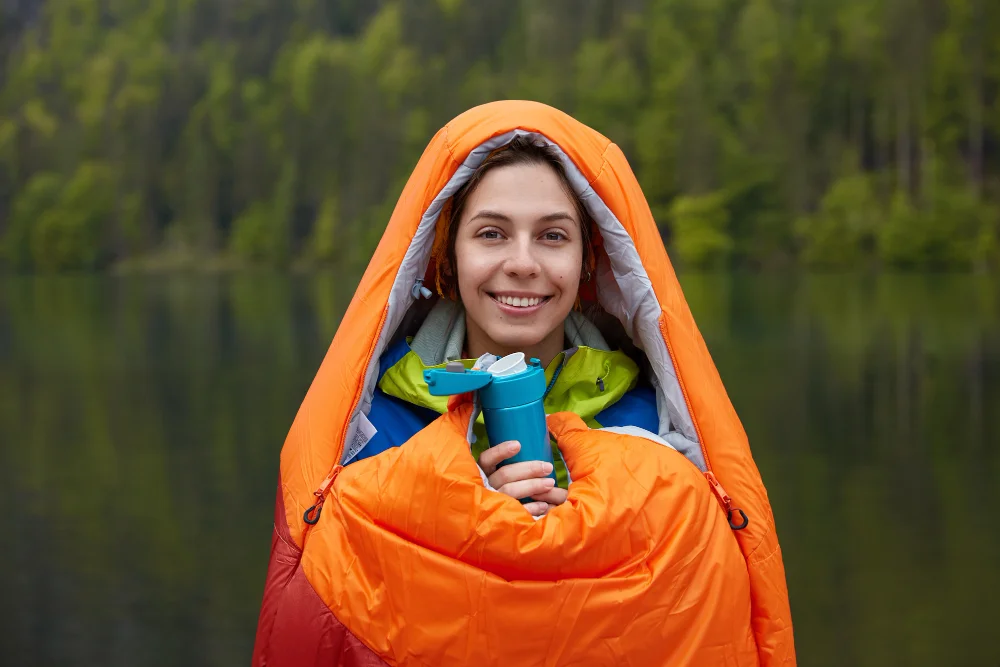
- Mummy bags taper from shoulders to feet, fitting body contours closely. This shape minimizes air space, requiring warming, making mummy bags most thermally efficient. Drawstrings cinch hoods around heads, leaving just faces exposed. The confined shape bothers some sleepers who feel restricted, but backpackers and cold-weather campers appreciate the warmth and weight savings.
- Semi-rectangular or barrel bags compromise between roominess and efficiency. They offer more space than mummy bags without the bulkiness of full rectangular designs, suiting campers who want moderate warmth without feeling confined.
Material and Durability
Shell fabrics affect durability, water resistance, and breathability. Ripstop nylon balances these factors, resisting tears while remaining relatively lightweight. Denier numbers indicate fabric thickness—20D is lightweight and packable,e while 40-70D offers better durability for rugged use.
Water-resistant coatings or DWR (durable water repellent) treatments help moisture bead off rather than soaking in. However, coatings wear off over time, requiring reapplication.
Zipper quality matters significantly. YKK zippers prove most reliable, resisting snagging and breaking. Full-length zippers provide ventilation options and easy entry/exit,t while half-length zippers save weight.
Weight and Packability
Weight matters most for backpackers carrying everything on their backs. Ultralight camping sleeping bags weigh under 2 pounds, while standard bags rangefrom 2 to 4 pounds. Car campers can accommodate heavier bags, prioritizing comfort over weight.
Packed size determines how much space the bag occupies in your pack or vehicle. Down compresses smaller than synthetic. Compression stuff sacks reduce volume further,r though excessive compression over long periods can damage insulation.
Types of Camping Sleeping Bags for Different Needs
Different camping conditions and styles require different sleeping bag characteristics.
Best Sleeping Bags for Summer Camping
Summer camping in warm climates needs bags rated 35-50°F. Prioritize ventilation features like full-length zippers that open completely for temperature regulation. Lightweight shells prevent overheating while still providing protection from nighttime temperature drops and insects.
Rectangular shapes work well for summer since thermal efficiency matters less in warm weather, and the extra room enhances comfort. Synthetic insulation handles humid summer conditions better than down.
Best Sleeping Bags for 3-Season Camping
Three-season bags rated 10-35°F handle spring, summer, and fall conditions in most climates. These versatile options serve casual campers who camp primarily during warmer months but occasionally encounter cooler nights.
Both down and synthetic insulation work for three-season use. Semi-rectangular or mummy shapes balance comfort and warmth. These bags represent the best sleeping bags for camping for people who don't specialize in extreme conditions or ultra-lightweight backpacking.
Best Sleeping Bags for Winter Camping
Winter camping requires bags rated 10°F or colder with robust insulation preventing heat loss. Down provides superior warmth-to-weight ratios for cold weather, assuming you keep it dry. Draft tubes along zippers, insulated hoods with drawstrings, and neck baffles prevent heat escape.
Mummy shapes maximize thermal efficiency in cold conditions. Some winter bags include additional draft collars cinching around the shoulders to trap warm air. These features add weight and bulk but prove necessary for safe, comfortable cold-weather camping.
Best Sleeping Bags for Backpacking
Backpackers prioritize weight and packed size above all else. Down insulation offers significant advantages for backpacking due to superior compression and warmth-to-weight ratios. Mummy shapes minimize weight while maintaining warmth.
Choose temperature ratings appropriate for expected conditions while avoiding excess warmth, adding unnecessary weight. A sleeping bag for camping trips requiring backpacking should weigh under 3 pounds ideally, with ultralight options weighing 1-2 pounds.
How to Maintain and Care for Your Camping Sleeping Bag
Proper maintenance extends the lifespan of camping sleeping bags significantly.
Cleaning Your Sleeping Bag
Sleeping bags need washing occasionally, but not after every trip. Excessive washing damages insulation and fabrics. Wash when bags become visibly dirty or start smelling unpleasant.
Use front-loading washing machines—top-loading agitators can damage sleeping bags. Select gentle cycles with cold water. Use a specialized sleeping bag cleaner or mild detergent without additives or fabric softeners that damage insulation.
For down camping sleeping bags, use down-specific cleaner, maintaining loft and water-resistance treatments. Rinse thoroughly, ensuring all soap residue is removed.
Storing Your Sleeping Bag Properly
Never store camping sleeping bags in stuff sacks long-term. Prolonged compression damages insulation, permanently reducing loft and warmth.
Store bags loosely in large cotton or mesh storage sacks, allowing insulation to maintain loft. Hanging bags in closets works well if space permits. Store in dry areas away from moisture, heat sources, and direct sunlight.
Before storage, ensure bags are completely dry and clean. Moisture trapped during storage promotes mildew growth and material degradation.
Repairing Small Damages
Address small tears immediately before they enlarge. Repair tape designed for camping gear provides quick field repairs. For permanent fixes, use repair patches with seam sealer or adhesive designed for sleeping bag fabrics.
Broken zippers often can be repaired rather than requiring complete replacement. Check if the slider needs replacing or if the zipper teeth are damaged. Sleeping bag manufacturers and outdoor gear repair shops can replace zippers when necessary.
Small holes in down bags require immediate attention, preventing feather loss. Adhesive patches stop feathers from escaping while more permanent repairs are arranged.
Additional Considerations for Choosing Camping Sleeping Bags
Beyond the basic features, several factors influence which sleeping bag works best for you.
Sleeping Pad Compatibility
Sleeping bags insulate above your body, but compressed insulation underneath provides minimal protection from cold ground. A quality sleeping pad complements your camping sleeping bag, providing crucial ground insulation.
Consider integrated sleeping pad sleeves or straps, keeping bags and pads together, preventing sliding during sleep. Some bags include pad sleeves built into the design.
Height and Build
Standard sleeping bags fit people up to 6 feet tall. Taller campers need long versions, adding 6 inches to the length. Shorter people benefit from regular or short sizes, preventing excess space requiring warming.
Width matters too. People with broader shoulders may find standard mummy bags constraining. Wide or extra-wide options provide more room without going to full rectangular designs.
Budget Considerations
The best sleeping bags for camping balance quality with cost. Budget bags ($50-100) work for occasional summer camping but lack durability and performance for serious use. Mid-range bags ($150-300) offer good quality for regular campers. Premium bags ($300-600+) provide maximum performance, minimal weight, and the longest lifespan.
Consider how frequently you'll camp and in what conditions. Frequent campers and backpackers benefit from investing in quality bags that last for decades. Occasional car campers might find budget options perfectly adequate.
Conclusion
Selecting the right camping sleeping bag requires evaluating temperature ratings matching expected conditions, choosing appropriate insulation type for your climate and budget, picking shapes balancing comfort and efficiency, and considering weight based on your camping style. Understanding these factors helps you choose the best sleeping bags for camping that suit your specific needs.
Temperature ratings should exceed expected low temperatures by 10-15 degrees, providing a safety margin. Down offers superior performance for dry conditions and weight-conscious campers, while synthetic works better in humid environments and tight budgets. Mummy shapes maximize warmth and minimize weight while rectangular designs prioritize comfort and space.