

There is a common misconception that sleeping in the woods requires a degree of physical suffering. People often associate the outdoors with waking up stiff, cold, and exhausted, as if a bad night’s sleep is a tax one must pay to see the sunrise from a tent.
This does not have to be the case. In fact, the quality of a person’s sleep often dictates the success of the entire trip. If the body cannot recover from a day of hiking or paddling, the next day becomes a slog rather than an exploration. This is why selecting a quality camping mattress is perhaps the most significant decision a camper can make regarding their gear.
Key Features to Consider When Choosing a Camping Mattress
Camper's Pick
Best for waking up rested and ready to go
A camping mattress is the most underrated piece of sleep gear — more than the bag, pad insulation and thickness determine how well you sleep in the field. REI's sleep pad collection filters by R-value, weight, and packed size so you can find a pad that's genuinely comfortable without being the heaviest item in your pack.
The market is saturated with options, ranging from simple foam pads to elaborate inflatable beds that rival a home guest room. Deciding which one fits a specific lifestyle requires looking past the marketing jargon and focusing on the mechanics of comfort.
Understanding Mattress Types
Choosing the right foundation for a night under the stars involves a trade-off between durability, weight, and pure physical relief. While some people can sleep on a thin layer of foam without a second thought, others find that their back demands a more substantial barrier against the uneven earth.
The decision usually comes down to three distinct technologies, each designed to solve specific problems found in the wild.
Here is a breakdown of the three main categories:
- Closed-Cell Foam Pads: These are the most basic and reliable choice. Made of dense foam filled with tiny air bubbles, they are lightweight and virtually indestructible. Since they don't rely on inflation, you never have to worry about a leak, though they are bulkier to carry and offer the least amount of cushioning.
- Self-Inflating Pads: A hybrid of foam and air, these pads feature an open-cell foam core that expands when the valve is opened. They provide excellent insulation and a firmer, more stable feel than pure air beds. They are a favorite for those who want a balance of convenience and structural support without carrying a pump.
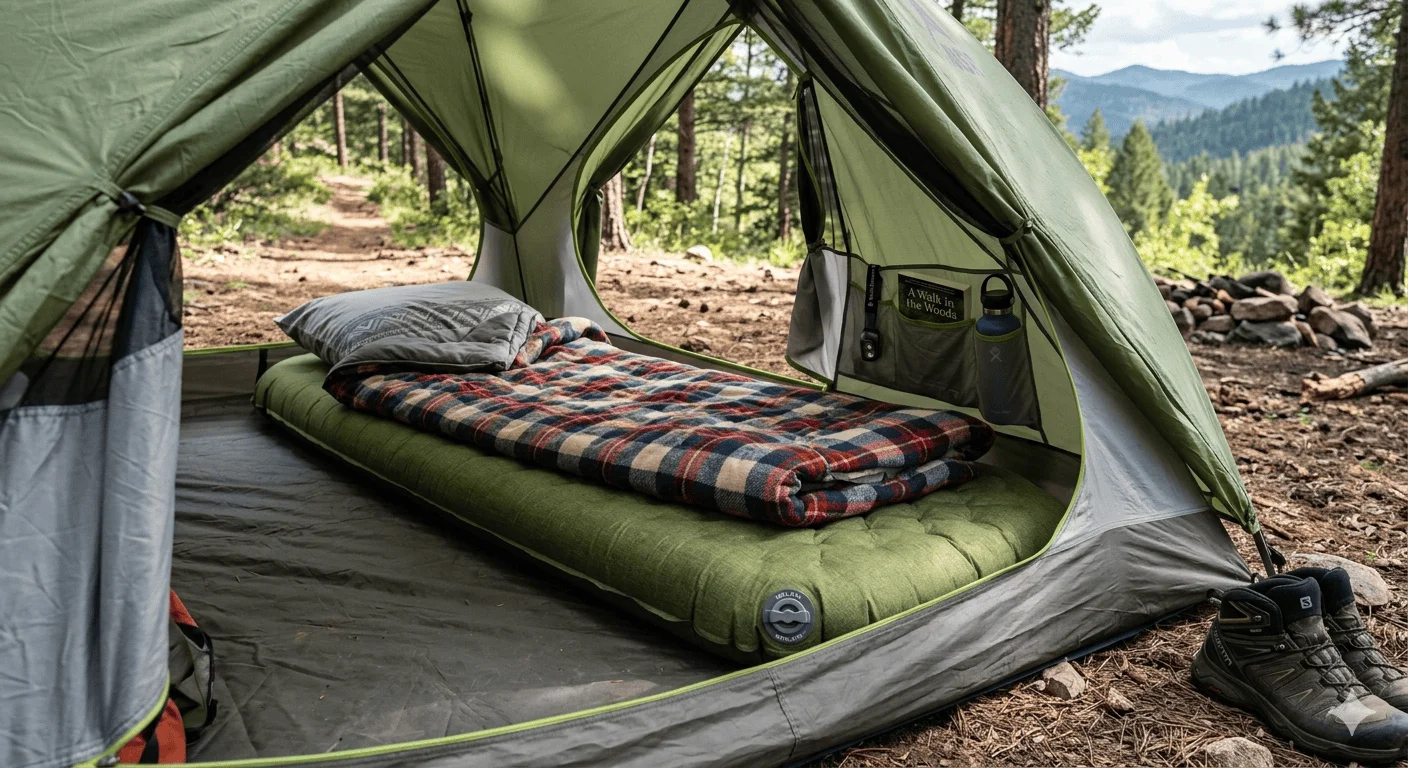
- Air Mattresses and Inflatable Pads: These rely purely on air for loft and support. They offer the most significant cushion for side sleepers and pack down to an incredibly small size. While they provide top-tier comfort and height, they require manual inflation and are the most susceptible to punctures from sharp rocks or sticks.
Comfort and Support
Comfort is subjective, but support is a matter of physics. A side sleeper will likely need a thicker camping mattress to prevent their hips and shoulders from bottoming out and touching the hard ground. Back sleepers can often get away with something thinner.
The internal construction of the pad—whether it uses baffles, dimples, or foam inserts—determines how well it distributes weight. If the air inside shifts every time a person moves, it can create a bouncy, unstable feeling. The goal is a surface that remains level and firm enough to keep the spine aligned throughout the night.
Weight and Packability
For those who carry everything on their backs, every ounce is a burden. A backpacker will prioritize a camping mattress that can fold down to the size of a water bottle and weighs less than a pound.
However, if the plan involves driving directly to a campsite, weight becomes irrelevant. In that scenario, one might choose a massive, plush mattress for camping that provides four inches of memory foam and air. It is helpful to be honest about how far the gear will actually be carried before making a purchase.
Insulation and Temperature Regulation
Many people don't realize that the ground sucks heat away from the body much faster than the air does. Even in the summer, the earth can be surprisingly cold. This is where the R-value comes in.
The R-value measures a material’s resistance to heat flow. A camping mattress with an R-value of 1 to 2 is strictly for warm weather. For three-season use, an R-value of 3 to 4 is ideal. If winter camping is on the horizon, a value of 5 or higher is necessary to prevent the cold ground from chilling the sleeper through the bottom of the tent.
Durability and Material Quality
The wilderness is not a gentle environment. Tents are often pitched on gravel, dry grass, or forest floors littered with sharp debris. The denier (thickness) of the fabric on the bottom of the camping mattress matters immensely.
A 20D fabric is incredibly light but fragile, while a 75D or higher fabric offers much better protection against tears. High-quality valves are also a hallmark of the best camping mattress options, as a leaky valve is just as frustrating as a hole in the fabric.
Ease of Setup and Inflation
After a long day of activity, the last thing anyone wants to do is spend twenty minutes manually blowing up a giant bed. Some modern camping mattresses come with "pump sacks" that use a simple physics trick to fill the pad with air in just a few breaths.
Others may require a battery-operated pump. Self-inflating models are the easiest, usually only requiring a few "top-off" breaths at the end to reach the desired firmness.

Budget Considerations and Value for Money
It is easy to get sticker shock when looking at high-end camping mattresses. Some top-tier models cost as much as a standard mattress for a bedroom. However, price should be viewed through the lens of longevity and performance.
Balancing Price and Comfort
A budget-friendly foam pad might cost twenty dollars and last for a decade, but if it results in back pain every morning, is it actually a good value? On the other hand, spending three hundred dollars on a high-tech ultralight pad might be overkill for someone who only camps once a year at a music festival.
The best approach is to find the intersection where the frequency of use meets the physical needs of the sleeper. For most casual campers, a mid-range self-inflating camping mattress offers the most bang for the buck, providing reliable warmth and decent cushion without the extreme price tag of specialized mountaineering gear.
Long-Term Investment in Comfort
Think of a quality camping mattress as an investment in future trips. Cheap air beds often fail after a single season because the seams pull apart or the plastic becomes brittle. Higher-end brands often provide repair kits and better warranties, ensuring that the gear stays out of the landfill and in the tent. When spread over five or ten years of use, the cost per night of a premium mattress for camping becomes quite reasonable.
What to Do Before Your First Camping Trip
The worst time to learn how a piece of gear works is at 9:00 PM in a dark tent.
Testing the Mattress
- Inflate it at home: Set up the camping mattress in your living room and leave it inflated overnight. This ensures there are no factory defects or slow leaks before you are miles away from a store.
- Lie on it: Spend an hour reading or watching a movie while lying on the pad. This gives you a chance to adjust the air pressure. Sometimes a slightly softer mattress provides better support than one blown up to maximum capacity.
Familiarizing Yourself with Setup
Every valve system is slightly different. Some are "one-way" to prevent air from rushing out while you take a breath, while others have a "dump" feature for quick deflation. Practice rolling the mattress back into its sack.
Many people find that getting the air out is actually harder than getting it in. Learning the "double roll" technique—rolling once to get most air out, closing the valve, unrolling, and rolling again—can save a lot of frustration during morning pack-outs.
Ensuring Your Outdoor Sleep Success
In the end, the search for the best camping mattress is a personal one. What works for a twenty-year-old backpacker will not work for a grandfather taking his grandkids to a national park.
The choice should be rooted in an honest assessment of one's own physical needs and camping style. Whether the priority is the lightest weight possible, the highest R-value for winter conditions, or the thickest foam for ultimate luxury, there is a mattress for camping designed to meet that need.
Choosing the right camping mattress is an act of self-care that pays dividends the moment the sun starts to rise. With the right gear beneath you, the ground feels less like an obstacle and more like a place where you truly belong. A restful night is not a luxury; it is the foundation of every great outdoor story.